Menu pricing guide · PrepSheet
How to price a menu to a target food cost percentage
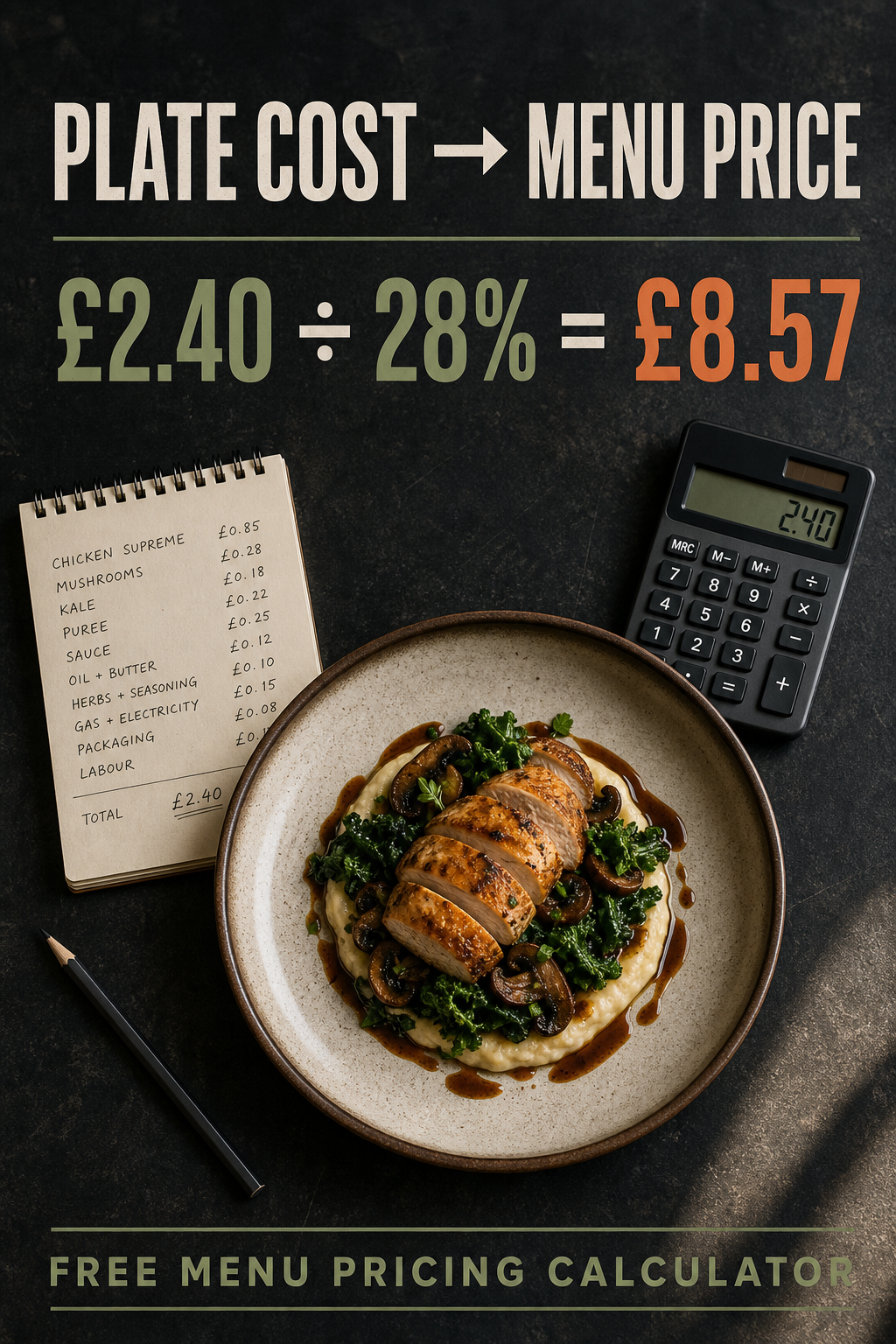
The shortest reliable calculation is menu price = cost per portion ÷ target food cost percentage. The percentage must be written as a decimal, and the portion cost must reflect what actually reaches the plate.
A dish costing £2.40 per portion at a 28% target gives £2.40 ÷ 0.28 = £8.57 before deliberate menu rounding and VAT decisions.
1. Cost the portion, not the packet
A £12 pack of chicken is not automatically a £12 recipe cost. Record the pack price, usable quantity after trimming or cooking, recipe quantity and portion count. For a simple ingredient, use pack price × quantity used ÷ usable pack quantity, then add the ingredients and divide the batch by its yield.
Check one dish in the free calculator →
Save this pricing formula to Pinterest ↗
2. Apply the target percentage
Once the portion cost is defensible, divide by the target percentage as a decimal. £3.10 at a 30% target gives £10.33; £4.25 at 32% gives £13.28. These are worked examples, not universal targets: your service model, portion, market and VAT treatment still matter.
3. Round deliberately
Keep the unrounded calculation in the worksheet and choose a customer-facing price separately. If £8.57 becomes £8.50, £8.75 or £9.00, recalculate the achieved food cost so the effect of rounding stays visible.
4. Keep VAT and service charges separate
Use the same inclusive or exclusive basis for inputs and selling price. Keep service charges, delivery charges and discounts separate from ingredient cost so the percentage remains comparable across dishes.
5. Recheck when suppliers move
A menu price based on last season's invoice is only a snapshot. Keep pack price, pack size, yield and date together, then update the affected dishes when a major ingredient changes. The goal is an explainable decision, not a percentage that only looks precise.
Cost and batch-scale a full recipe when the dish is more than a one-off calculation, or use the PrepSheet costing templates when a repeatable worksheet saves time.